
Antalya on Weekdays and Weekends: Two Different Paces for Families
FindAntalya Guide TeamJuly 3, 20267 min read
When the city’s rhythm changes, the family plan changes too
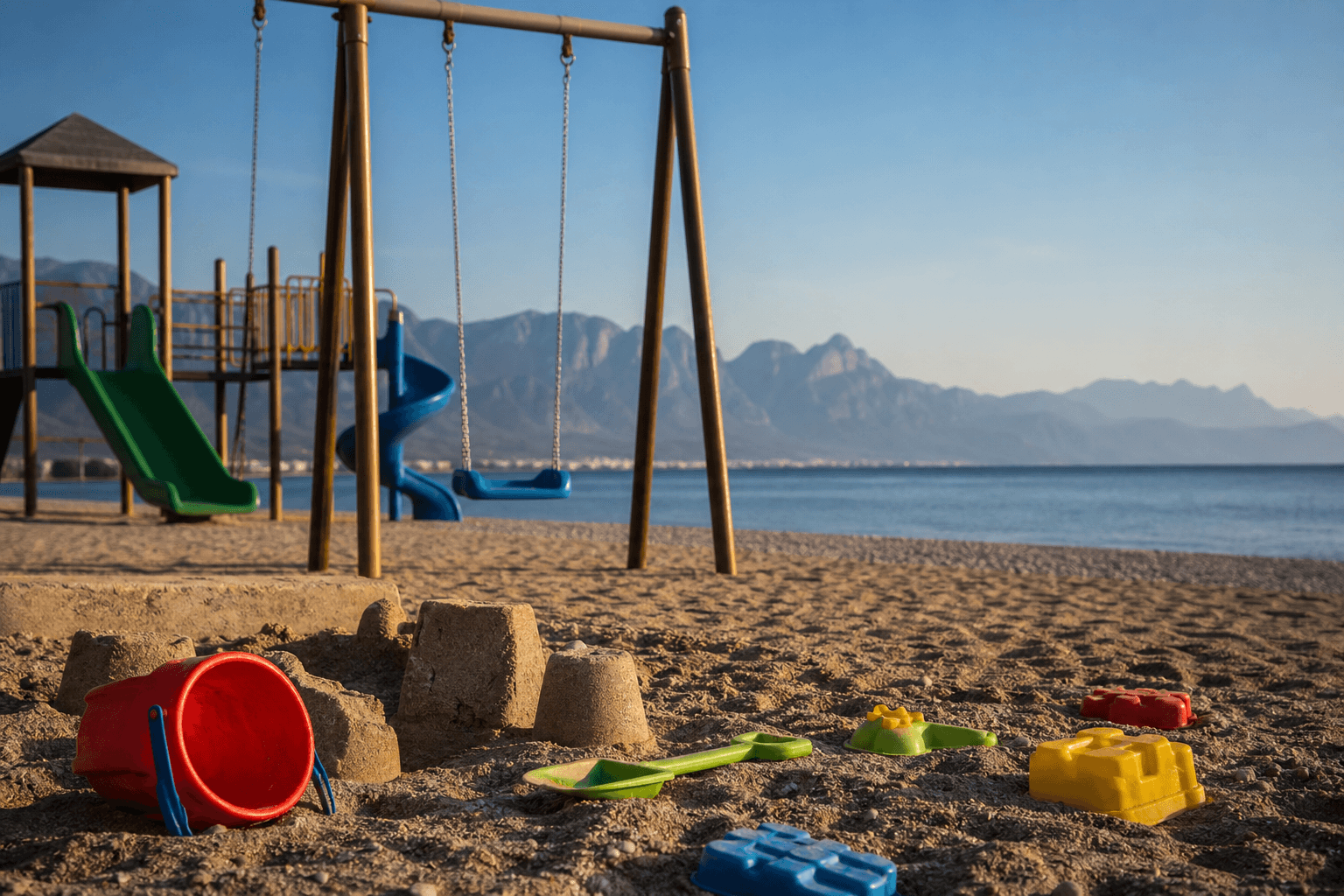
In Antalya, the most noticeable difference between weekdays and weekends is not just that the crowds grow; it’s that the type of movement changes. On weekdays, the city flows more in the rhythm of everyday life. In the morning and at midday, people walking along the coast, those taking a breather between work, families with children, and older people create a more balanced spread. For anyone getting around with a stroller, that means a more predictable environment. You don’t have to walk shoulder to shoulder through passing areas, and it’s easier to find a suitable bench or some shade for a break.
On the weekend, however, the city—especially the waterfront, parks, and popular squares—moves toward a single rhythm: everyone goes out at the same time. That’s why if you’re out with a small child, it’s better to keep the plan a little tighter. If you’re late, shady spots fill up, finding a place to sit gets harder, and children’s patience runs out before adults’. Especially in the afternoon, when the crowds build up, it’s more sensible to think of busy points as short stops rather than long walks.

For families arriving with babies, weekdays are easier; because there may not be enough noise and movement to disturb nap times. Small children may find the lively atmosphere fun at first on weekends, but waiting in line, moving through narrow passages, or keeping up with long walks quickly becomes tiring for them. Bigger kids are more easily entertained in a crowd; still, the same view and the same walk can eventually start to feel repetitive to them too. That’s why keeping the time short according to the child’s age and not stuffing several big goals into one day is a good method.
Stroller, shade, and toilet: comfort is hidden in the details
Getting around comfortably with a stroller in Antalya is possible; but not every area offers the same ease. Coastal walking paths are generally more suitable. Flat ground, wide walking space, and benches give families an advantage. By contrast, in places with an old street texture, sidewalks narrow, ramps can be interrupted, and stone surfaces can shake the stroller. So if you’re going around with a stroller, it’s the route, not the destination, that needs to be chosen well. Instead of one long walk, shorter loops that connect flat and uninterrupted sections are safer.
The shade issue should be taken seriously in Antalya. In summer, shade in open areas can fill up very quickly at midday. Even in places with trees, the sun changes angle at certain hours, and while you think the child is fully in shade, they can suddenly end up in the open. That’s why you should start out with a hat, a thin but long-sleeved spare layer, and water. For babies, shade is essential; for small children, you also need to plan a cooling break along with the shade. Standing in the shade alone is not enough; it’s better to look for a spot with a light breeze.
Toilets and sinks are also points families shouldn’t overlook. In Antalya, toilets may be found in some coastal areas and around parks; however, lines can form during busy hours, and sink cleanliness can vary during the day. So if your child is small, don’t rely too much on the comfort of “we’ll find one nearby.” Taking a bathroom break before you leave home, bringing wet wipes and a spare diaper-changing kit, makes the day much calmer, especially if you’re out with a baby. For older children, leaving the toilet to the last minute creates unnecessary stress; splitting the outing into short stages from the start is smarter.
Water access matters too. When Antalya is hot, if a child gets dehydrated, the outing suddenly becomes difficult. Especially small children riding in a stroller become restless before they even say, “I’m thirsty.” So keep water visible and easy to reach. In addition, small snacks help too; but when combined with sand on the beach and dirty hands, things can get messy. Having wipes, napkins, and a small trash bag in the bag can save the day.
Quiet on weekdays, lively on weekends: which age likes what?
For babies, weekdays offer a more suitable experience. There’s less noise, a more comfortable walk, and a flow that fits nap time. If you’re going out with a baby, keep the goal clear: a short coastal walk, a cool break, and back home. Anything more is usually unnecessarily tiring. For a baby, the quality of the day depends more on the uninterrupted calm time than on the places seen.
Small children may seem to enjoy the weekend crowd at first. The movement of people, the sound, the colors, and the open space appeal to them. But this interest doesn’t last long. Waiting in line, the long midday heat, and walking at adults’ pace become boring after a point. For this age group, the best method is to structure the outing as “one main stop + a short play break + return.” A short bit of time on the sand, a quick energy burn in the park, or a cool break after a seaside walk is more effective than a long plan.
Older children, on the other hand, read the difference in the city much better. They compare weekday calm with weekend liveliness and ask more questions. For them, observing the surroundings, watching people running along the beach, following cyclists, or looking at the movement in the square can be enjoyable. Still, it’s normal for older children to say, “I’m bored” from time to time. They become impatient especially when the same view goes on too long or when all they have to do is walk. For that reason, give them small responsibilities: finding the way, keeping track of water, taking turns with photos. That way, the outing isn’t just the adults’ job.
Weekends are more lively on the one hand, but they also burn through children’s energy more quickly. When noise, heat, and crowds pile up, everyone’s tolerance drops by the afternoon. That’s why the best hours for families are usually early morning to just before noon. Late afternoon should be shorter, more targeted, and with the return planned. The sentence “let’s stop by one more place” often comes back later as tiredness.
Don’t go out without a B plan
The healthiest kind of family outing in Antalya is one that can change shape according to the weather and the crowd. If one area is too crowded, a quieter green space nearby or a shaded walking path is a good alternative. If the weather is hotter than expected, shorten the open-air part and switch to a route where you can let the child burn off energy in a more controlled way. For unexpected toilet needs, hunger, or sleepiness, keep simple but useful things in the bag: water, snacks, wet wipes, a spare T-shirt, a small blanket, or a thin cover.
When you’re out with children, a B plan is not an “alternative tour” but a real insurance policy that saves the day. For example, if the seaside walk goes on too long and a small child gets bored, stopping for a few minutes at a nearby park and then heading back may be the best option. If you’re going with a stroller, tying the return to a single main transport point prevents spontaneous extensions. With older children, you should not miss the drop in energy too late; thirst and hunger often look like fussiness.
You don’t have to choose between Antalya’s weekday and weekend faces; just set your expectations correctly. Weekdays are calmer, smoother, and more manageable. Weekends are livelier, more social, but more tiring. The best family experience comes with a time span suited to the children’s ages, the right hour, and a solid backup plan. To enjoy the city, you don’t need a big program, but a well-adjusted small one.
For up-to-date business info and reviews about the places mentioned in this article, browse Antalya businesses on FindAntalya.
Featured with FindAntalya
Build your whole Antalya trip in one place
Flights, transfers, tours, hotels, insurance — find the best deal with FindAntalya-approved partners.

Airport transfer
Meet & greet, fixed price to your hotel
See prices
Car rental
Local suppliers, airport pickup
See prices
Tours & activities
Boat, safari, diving, day trips
See prices
Museum & attraction tickets
Aspendos, aquarium, theme parks — mobile ticket
See prices
Tourist eSIM / data
Get online the moment you land
See prices
Travel insurance
Policy in minutes, peace of mind
See prices
Hotels & stays
Compare by area, find the best deal
See pricesPartner links; booking and payment are completed at the provider. Prices come from the provider.