
BlogFamily Trips· Transfer & Car Rental
Saving time while waiting for the bus in Antalya: stop-hour-crowd density
FindAntalya Guide TeamAugust 21, 20267 min read
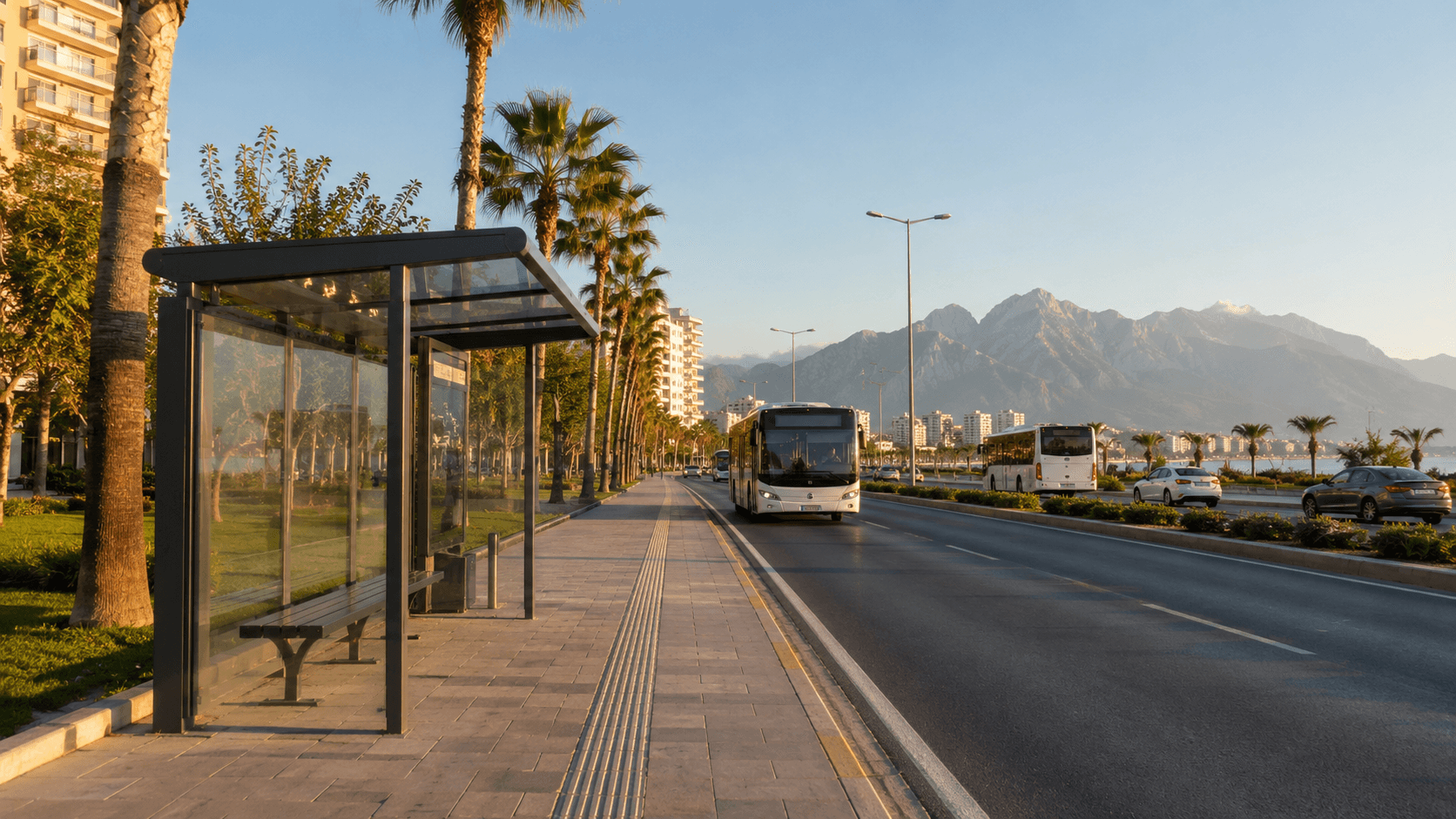
Waiting for the bus at a stop is where most time gets lost—not so much because of the bus itself, but because of the uncertainty of “will it come or not?” and because you end up lingering in the crowd. In Antalya, with the right stop + the right time + a short walking buffer, you can make the waiting part much more manageable.
Stop choice: look for a “transition space” for a stroller In Antalya, some stops are on the main road, while others are at entrances to side streets. The most practical criterion with a child is this: is the space you’ll wait in truly a “stop,” or is it a spot squeezed onto the sidewalk?
For a baby stroller (puset), you’re looking for:
- Sidewalk width: An area where you can keep the stroller with you and wait without needing to “stand like a barrier” right next to the door.
- Roadside slope: Even a slight slope can make the stroller slide—especially on the day you’re using it for the first time or you’ve just newly adjusted the brakes.
- How the bus pulls in: On some routes, the vehicle doesn’t come up close to the stop. In that case, you may need an extra one or two steps for boarding and getting off.

Practical tactic: if the stop is crowded, instead of waiting in the middle with the stroller, move a little back from the stop line—you’ll be more comfortable and it’ll also be safer when getting on/off. The same approach works for small kids too: rather than walking around in a crowd, pick “a small area you can stand in.”
Shade is critical here. In Antalya, the sun at midday tires you quickly. If at the stop there’s no tree shade/eave/a short covered area, make time for “walking,” not “waiting.” Moving a few minutes on foot to a more comfortable spot can sometimes be less exhausting than waiting.
Time and crowd logic: 3 rules that shorten waiting There’s no guarantee about when the bus will arrive—but crowd behaviors usually repeat. To save time with family, use this logic:
1) Target times when boarding and getting off are easier. During morning commuting hours to work/school and in the evening return period, buses are usually fuller. At those times, waiting at the stop doesn’t just stretch your time—it also extends your child’s stress. If possible, shift your plan to a period with lighter crowding.
2) When it starts getting crowded, decide on a “stop time.” The longer it turns into “we’ll wait a bit more,” the more tired the child becomes. Decide by age group:
- Baby (puset): If uncertainty goes beyond 15–20 minutes, it can interrupt sleep and create restlessness. At that point, a short B plan becomes more valuable.
- Small child (about 2–5 years): Noise, shoving, and long waiting lead to “boredom + a need for movement.” Once you go past 10–15 minutes, attention can start to drift.
- Older child (6–12 years): Don’t let the stubborn waiting drag on—turn it into a game. But don’t let it turn into a stop showdown; once you pass 15–20 minutes, you may need a “movement reward.”
3) Consider that getting off at the next one or two stops might be easier.
On some routes, stops are close together. Instead of waiting in a crowded stop, create an option: by walking one stop forward/backward, you may increase the chance of boarding a less packed bus. This makes a big difference especially with a stroller. The “buffer, not lost time” idea works for saving time on foot: usually, over a span of a few stops, you can make up a difference in the 10–15 minute range by walking—waiting in a crowd is generally felt as longer.
“Shade + toilet + keeping them occupied” plan: don’t go out without a B plan When heat and crowds come together in Antalya, the biggest issue becomes the toilet/lavatory. That’s why you only need a small checklist before you even start waiting at the stop.
- Toilet-lavatory: If you’ll likely be standing for a long time before the bus arrives, pick a reference point in your route for the “closest quick-use solution.” Not every stop has a toilet—so visualize alternatives near the stop in advance, like open areas/markets/facilities. If you’re not sure about a spot, don’t say “we’ll look later.” Decide before your child grows restless.
- Managing temperature: Have a hat, water, wet wipes, and a thin cover (for the stroller) with you. If you’ll be waiting at a stop without shade, don’t plan to “finish” the water after the bus arrives; make a small-sips plan.
- Catch the boredom moment: Boredom usually doesn’t come from “waiting getting longer,” but from “waiting becoming unpredictable.” So make the waiting more predictable.
Keeping-the-kids-occupied suggestions by age (no clichés, actually useful):
- Baby/stroller: Quiet stimuli. Keep a gentle lullaby/sleep routine. Don’t hang too many crowded toys in front of the stroller; if the child is awake, help them settle back down with calm sound and rhythm.
- Ages 2–5: Give short tasks like “count the stops” or “find things of the same color.” Use a clear trigger like: “not when the next vehicle comes, but when it arrives right now.”
- Ages 6–12: Talk via the map/route: have them imagine—“we’re going over this street now, and then we’ll go to a place like this.” Instead of long waiting, set a “mini goal”—for example: “when we pass this stop, we’ll do one memory moment together, with a photo.”
B plan (for unexpected extensions):
- Pick a nearby walking target: Going to a more comfortable spot with a rough 5–10 minute walk from the stop often works. For finding shade or creating movement space for the child.
- Think of alternatives instead of public transport: Sometimes you get the feeling “the same line might not come for a while.” In that case, don’t escalate an argument at the stop—think in terms of “the next option interval.” Psychologically, this keeps the family at ease.
Remember: saving time isn’t about finding the fastest option—it’s about managing the waiting. In Antalya, if you read the stop-crowd-sun trio correctly, the family flow won’t break, no matter how small the child is.
S/C: Short guide summary (look at it without ever leaving) - Stroller: look for a wide sidewalk and space for the bus to pull in. - If there’s no shade, instead of waiting, move to a more comfortable point with a 5–10 minute walk. - Crowds increase on the morning/evening return times; shift your plan as much as you can. - Limit waiting time based on the child’s age (baby ~15–20 min, small child ~10–15 min, older child ~15–20 min). - Plan your toilet stops together with your route; don’t do the “we’ll look later” at the stop. - B plan: instead of staying at the stop, walk to a nearby target; prepare occupation tasks according to age.
Frequently asked questions: How can bus waiting be easier with a child? ### If the bus is delayed, what should I do with my child—without panicking? First, shrink the goal: set a boundary for yourself—“just this many more minutes.” Give the child a short task (finding colors/singing/mini-counting). If uncertainty keeps stretching, instead of staying at the stop, moving to a more comfortable point with a 5–10 minute walk reduces stress for many families.
What should I pay attention to when getting on/off at the stop with a stroller? Check the sidewalk width and the distance needed for boarding and getting off right at first glance. Wait without moving the vehicle onto the road, and if possible, stand slightly behind the stop line. Never lose sight of the brakes and direction (if there’s a slope). If it’s crowded, first position yourself safely with the stroller, and then push/tend to others.
If I can’t find shade, is it better to wait or walk? Without shade, waiting a long time at the stop generally wears you out more. If possible, move to a cooler/more enclosed spot with a 5–10 minute walk from the stop. To shorten waiting time, give up the idea of “I’ll wait at the same spot no matter what,” even if it’s crowded; a short walk is usually more comfortable.
For up-to-date operating information and reviews about the places mentioned in this article, check out the FindAntalya Transfer & Car Rental list.
Featured with FindAntalya
Build your whole Antalya trip in one place
Flights, transfers, tours, hotels, insurance — find the best deal with FindAntalya-approved partners.

Airport transfer
Meet & greet, fixed price to your hotel
See prices
Car rental
Local suppliers, airport pickup
See prices
Tours & activities
Boat, safari, diving, day trips
See prices
Museum & attraction tickets
Aspendos, aquarium, theme parks — mobile ticket
See prices
Tourist eSIM / data
Get online the moment you land
See prices
Travel insurance
Policy in minutes, peace of mind
See prices
Hotels & stays
Compare by area, find the best deal
See pricesPartner links; booking and payment are completed at the provider. Prices come from the provider.