
BlogBudget Travel· Transfer & Car Rental
Cheap bus travel in Antalya: card, routes, and payment system
FindAntalya Guide TeamJuly 8, 20266 min read
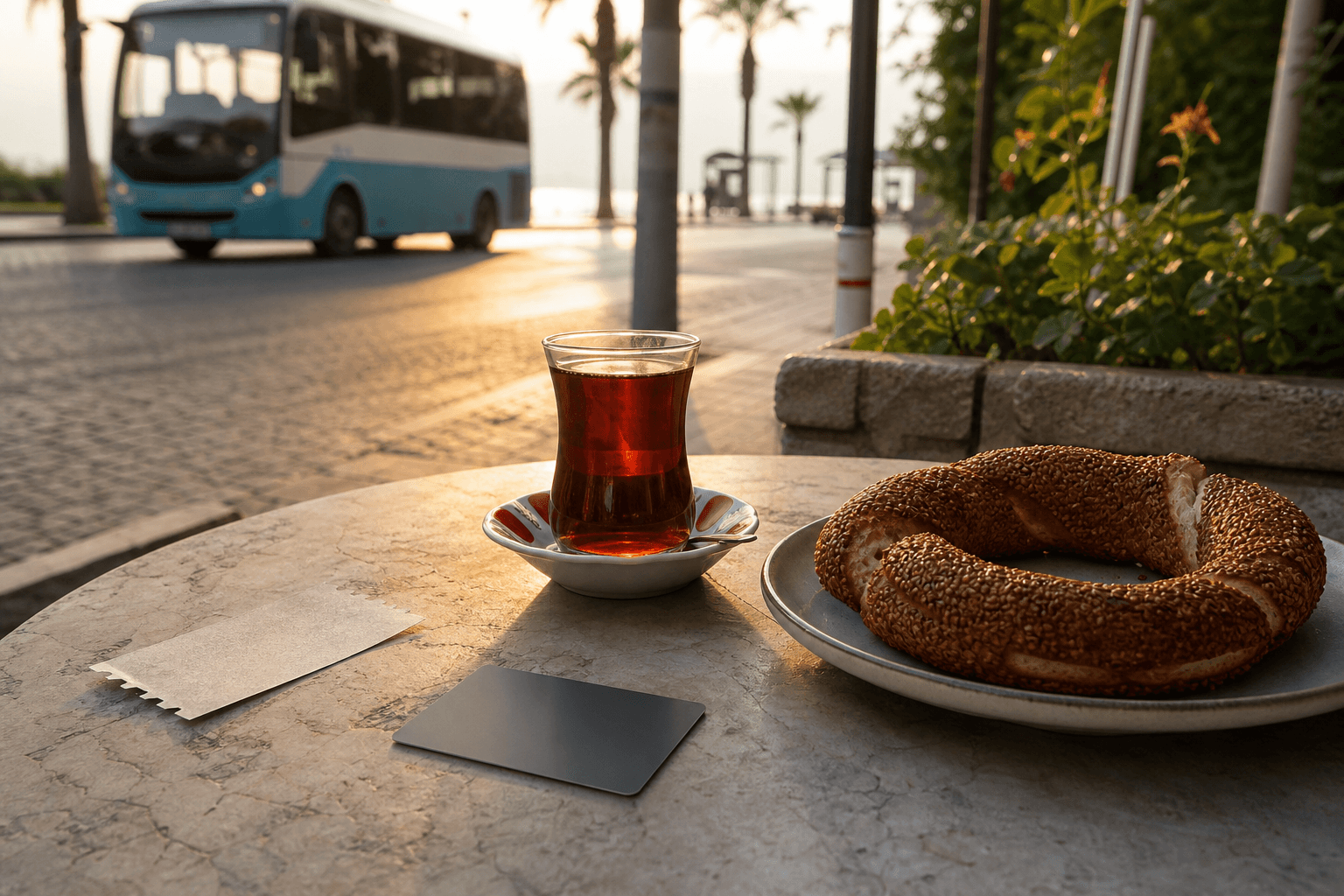
The most sensible way to see the city cheaply
In Antalya, bus travel within the city is one of the options that protects your wallet the most. Especially if you’re staying in the center, taking the bus instead of ordering a car for short distances often works out much better. There’s a regular flow between the airport, the coastal line, central neighborhoods, and transfer نقاط; so if you plan your route, the waiting time also stays at a reasonable level.
The advantage of the bus isn’t just the budget. You don’t get stuck in traffic, you don’t have to deal with parking, and especially in the hot months you can travel more comfortably with air conditioning. The downside is that some lines get crowded during peak hours and may require transfers. So if you’re using it for the first time, it’s a good idea to check in advance whether you can reach where you’re going on a single line or whether you’ll need a transfer.

When going from the center to the coast, toward the university area, around the bus terminal, or to the entrances of the districts, the bus is usually economical. For short distances, the dolmuş (shared minibus) can sometimes be more practical; but if you’re going to ride regularly, the bus often offers a more budget-friendly solution.
How the card works, and what to expect on the payment side
In Antalya, the card system is the main way to use public transport. Riding with a card is more orderly and practical than dealing with cash. In general, you load your card in advance and use it by tapping it at the turnstile or device. For daily use, this is the most comfortable method.
The biggest benefit of the card is that it reduces the hassle of paying one by one. Especially if you’re going to ride several times, moving along with the card makes more sense. In some cases you may need to find a loading point; that’s why it’s a good idea not to leave it until the last minute on your first day. In busy areas there are more top-up options, and as you move outside the center these possibilities can become scarcer.
The cash side can vary depending on the line, so before you set out you should check the current method. On some lines, finding an alternative to the card can be difficult. For that reason, the approach of “I’ll just go and sort it out there” doesn’t always make things easy. The safest route: have the card ready in advance, top up the balance, then head out.
And there’s this too: if you’re boarding more than once in a day, the card system makes planning easier. Especially if you’re moving between the center, the bazaar, the seaside, the museum area, or shopping spots, sticking to one transport system keeps the budget more under control.
Routes, dolmuşes, and nearly free alternatives
When using the bus in Antalya, the real issue is less which line you’ll take and more knowing where to get off and where to transfer. The main arteries in the center pick up most passengers; lines heading toward the coast get busier in the summer season. At district entrances, line frequency can be lower than in the center. So instead of leaving the last stretch only to the bus, it’s worth thinking of the dolmuş as an option too.
The dolmuş can save you a small amount of time on some routes. Especially if you want to get quickly from one point to another, it can feel more practical than the bus. But that’s where the dolmuş’s charm ends: during busy hours you may have to stand, stop-and-go traffic happens more often, and on some routes the cost can feel higher than the bus. In short, for short and direct trips the dolmuş is better, while for more planned journeys with multiple stops the bus makes more sense.
There are also options that can be considered free or almost free. For short distances, walking is sometimes the best solution, especially in central neighborhoods. In areas close to the coast, moving from one point to another on foot is both free and a way to discover the route. Where you can use a bike, that’s a good alternative too. If you choose early morning or late afternoon instead of the hottest hours, you’ll be more comfortable.
Getting to public beaches is also a good plan for those who want to keep costs down. It’s possible to go with buses near the coastal line or suitable dolmuş connections, then spend the rest of the day enjoying the sea for free. The combination of transport that stays cheaper than the center + public beach works well, especially for one-day escapes. You can bring food and drinks with you and stretch the day without paying extra outside.
Sundays, busy hours, and planning on a small budget
On Sundays, the pace of public transport can change. Some lines may feel as if they run less frequently than on weekdays, while in some areas the tourist movement means crowding doesn’t really drop. That’s why in a Sunday plan, instead of saying “the bus will come often anyway,” it’s important to check the times before you move. Checking before you go really helps here.
The best way to protect your budget is to spread the day over a single area. A short walk in the center in the morning, a move to the coast in the afternoon, and a return in the early evening keeps multi-leg transport costs down. Instead of constantly trying different lines, if you stay on the same axis you’ll be more comfortable in terms of both time and money.
Another practical Sunday option is to target the bazaars. Local markets offer a chance to shop more economically than at supermarkets. Going to the market by bus or dolmuş and buying your essentials lets you finish the day without overspending in the seaside areas or the center. Especially the markets set up in neighborhoods away from crowded tourist zones are a good option for getting around without hurting your wallet.
The essence of keeping your public transport plan cheap is this: bus for long distances, dolmuş for short and direct hops, walking for very close points. If the sea is part of the plan, center the public beaches. That way transport stops being an expense item that drains your budget and becomes the vehicle that carries the day.
If you want to get around Antalya while protecting your wallet, first get your card ready, then plan your area so you can see it in one go. The trio of center, coast, and bazaar is often enough. If you’re asking where to look on this budget, the most sensible starting point on FindAntalya is neighborhoods where transport is easy, areas around public beaches near the coast, and neighborhoods with strong bazaar connections.
For current business information and reviews about the places mentioned in this post, take a look at the Transfer & Car Rental listings on FindAntalya.
Featured with FindAntalya
Build your whole Antalya trip in one place
Flights, transfers, tours, hotels, insurance — find the best deal with FindAntalya-approved partners.

Airport transfer
Meet & greet, fixed price to your hotel
See prices
Car rental
Local suppliers, airport pickup
See prices
Tours & activities
Boat, safari, diving, day trips
See prices
Museum & attraction tickets
Aspendos, aquarium, theme parks — mobile ticket
See prices
Tourist eSIM / data
Get online the moment you land
See prices
Travel insurance
Policy in minutes, peace of mind
See prices
Hotels & stays
Compare by area, find the best deal
See pricesPartner links; booking and payment are completed at the provider. Prices come from the provider.