
BlogField Notes· Transfer & Car Rental
Antalya Airport → to the city center: Dolmuş or tram or transfer?
FindAntalya Guide TeamJuly 26, 20267 min read
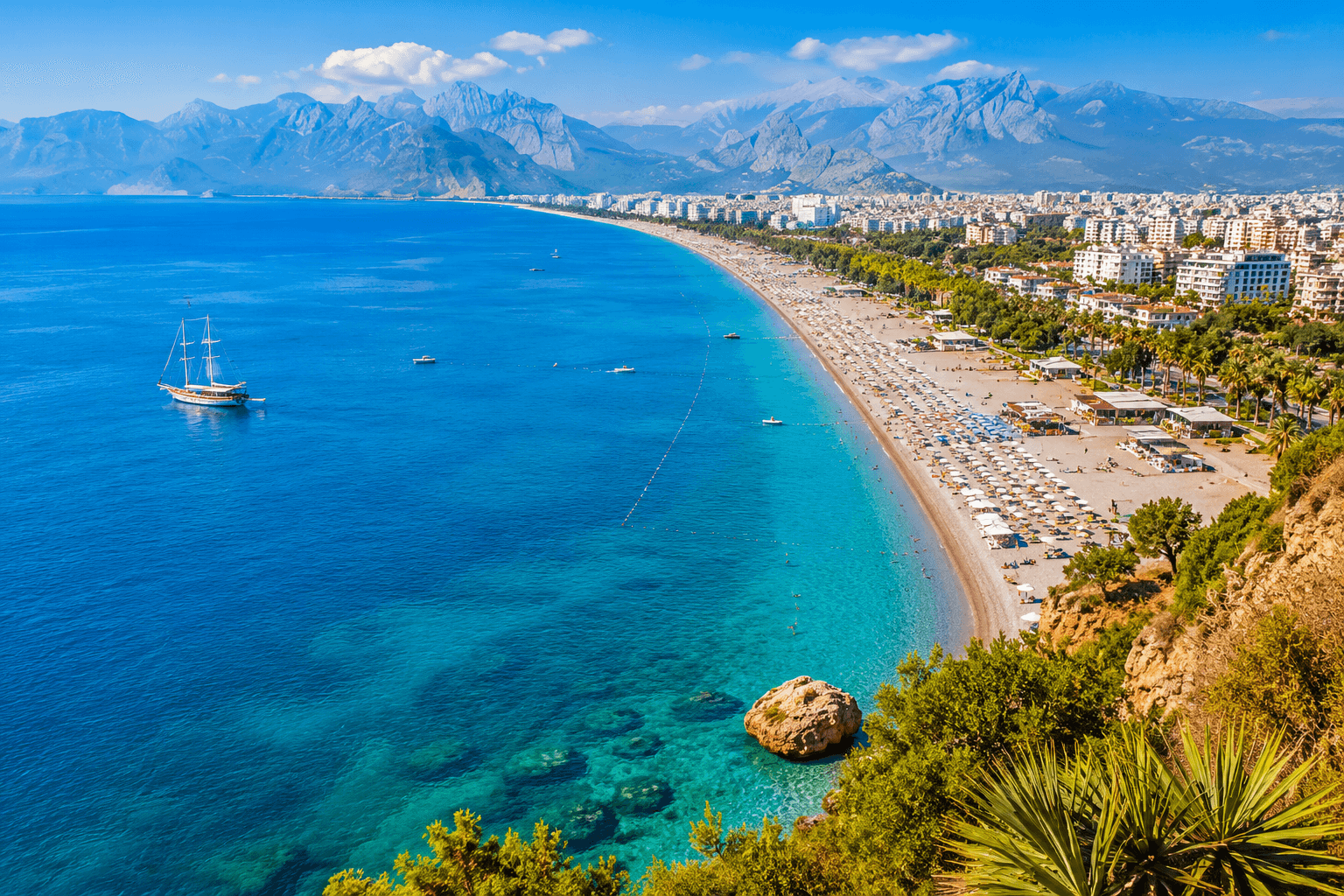
From Antalya Airport to the city center, there are three options: a bus/dolmuş (dolmuş: shared minibus) line—which is usually the cheapest and most flexible; the tram—which is comfortable but requires the right connections and route fit; and a transfer—which takes you to your doorstep with the least effort, but costs more.
If it were me, on my first day I’d do bus + a walk. On my last day, if I’m saying “I’m tired,” I’d choose a transfer. Still, the decision becomes clear depending on your budget and the neighborhood you’re staying in.

Bus and dolmuş: Most work, least money As soon as you leave the airport, everyone who says “I need to get somewhere” heads for the bus. The biggest advantage is this: routes that go to different parts of the city fill up frequently; that means waiting isn’t the same for everyone—if you line up with the right time, you save time. There’s also the real-world side of it: if your suitcase is heavy, even the first step can sap your mood, and the dolmuş/bus side is more forgiving here.
One day I thought I’d left my luggage inside somewhere. Turns out there’s a compartment at the terminal, and I’d skipped it. Not like a turnstile or anything, but you do a couple of loops with the confidence of “okay, I’ll find it now”—and then you realize the process has become like a ticketing route, and things fall into place quickly. That’s what bus/dolmuş routes do: they remove hassles like this because the stop layout is more practical.
This choice is also tied to the “character of the neighborhood.” For example, when you go toward Konyaaltı, you move closer to the coast; the streets are cool in the morning, and the sea smell feels a bit lighter. In the late afternoon, everything turns warm and rosy: tea gardens are in conversation, footsteps pick up between the tiles, and more people are walking along the cliff (falez) line. When you arrive by bus, you catch that rhythm too; it settles in your head like “it’s always like this here.”
So the bus/dolmuş line suits this kind of traveler: someone who starts taking photos on day one, changes plans when “the weather’s nice,” and chooses to spend money on the journey instead of on the hotel. Someone who walks a lot in the city and treats getting around like a bit of adventure… Or someone who says, “I’m not paying mountain-sized fees for the vehicle that takes me.”
Tram: Comfort is great, but the right neighborhood matters When you hear tram, your mind instantly goes to “I’ll get there comfortably.” Correct. You glide by with the view from the window, stop distances are set, and the rhythm is calmer. But tram’s golden rule is this: the neighborhood you want should be on (or reachable from) the line, or there needs to be only a short continuation walk/transfer. So you’re not building your plan “door to door”—you’re building it “from tracks to the neighborhood.”
The moment you think about the tram in Antalya, you picture the city’s direct “center flow.” When the morning light appears, the streets are quiet first; shop owners open their stores, and you start to smell cleanliness on the main road—then the tone of coffee and fresh simit (sesame bread rings) rises. In the evening, the rhythm speeds up again: more lights, busier cafés, and the vehicles seem to shift from honking to a tone of conversation. The tram lets you experience that transition more comfortably, especially when you’re tired by the end of the day.
I once thought, “There’s a tram—I'll go straight.” After two stops, I got off and the air was a bit windy, and the wheels of my suitcase were throwing a fit at the curb stones. For a while, I had to do a quick dash between the stop and my destination. Was it bad? No. But it doesn’t give you that “ready-made package” feeling like a transfer does. That’s why tram fits better for people who plan to stay close to the city center.
With the tram, the neighborhood type that matches best is usually the kind that’s “walkable” and where everything is close together. The streets smell more lively; the night lights are sharper, and the mornings are more orderly. This option fits the traveler profile who loves photos but gets annoyed at the job of dragging a suitcase. They’re also okay with walking around within the city—so finishing that last bit of walking isn’t a problem for them.
Transfer: Least energy, highest price The promise of a transfer is clear: you’ll be met at the airport exit, and you’ll be taken to your chosen neighborhood along a specific route. Especially once evening comes and the city gets denser, transfer gives you psychological ease. If you’re saying “I won’t think about it right now,” you leave all the planning parts of the road behind you.
But there’s the money issue. Transfers are usually more expensive, and that’s the kind of thing that immediately puts the brakes on people like me who note, “the thing I find expensive is expensive.” Still, the right timing and right place make all the difference: when the hours shift on day one, when you’re going with a child or a group that’s older, or when you don’t want to wrestle with two suitcases all the time—then a transfer makes sense. Comfort here isn’t a luxury; sometimes it’s just practical.
With a transfer, the neighborhood portrait becomes even more vivid. Because once you get into the vehicle, you catch the street smells, the direction of the wind, and the changes in the lights with less stress. For instance, when you end up on the Lara side, there are wider roads and a more “vacation mode” atmosphere; mornings flow with more regular traffic, and in the evenings the lights stretch out. You’re sitting as if you’ve settled in from the first minute. No need to search for a place on foot—without having to walk around, you switch straight into “okay, I’m going to the sea now” mode.
The traveler transfer fits best is the one who’s in a hurry, makes plans, but isn’t a control freak. They’ll take photos too—but first they place themselves in the city without tiring out. And when they say “it’s hot and I have no energy,” that’s exactly when it’s the right choice. So the tone of the day decides.
Which one is for you? Decide with three questions Now, let’s get to the decision. First question: Is your accommodation close to a tram line, or not? If it’s close, tram is sweeter; if it’s far, the bus/dolmuş option creates less hassle. Second question: How much walking can I handle? If you’ll be carrying a suitcase, transfers or lines that pass closer are better. Third question: Are you protecting your budget, or your energy? If saving energy matters more to you and feels expensive, choose bus/dolmuş; if time and comfort are more valuable, choose transfer.
Also, the city has its own character. In Antalya, mornings soften with the wind, and in the evening they sharpen with the crowd. When you go by dolmuş, that transition feels like a “local rhythm.” When you go by tram, you experience a more regular flow. When you go by transfer, you see the city as if it’s “completed” faster. All three are good. It’s just a matter of the right time and the right method.
Even so, if you have the chance to go in the morning, you’ll solve transfers more easily. The evening lights are beautiful, but crowds build up faster. A small suggestion: move according to your flight’s landing time. The thought of “I’ll get out right away” can sometimes make you walk longer inside the terminal. I once behaved close to takeoff and finished my first coffee later—because luggage and directions had me looping around for one more round. You don’t need that kind of loop.
Final word: Bus/dolmuş is usually the most balanced. Tram is wonderfully comfortable if you stay in a nearby area. Transfer is the choice of “let me do something nice for myself today.” Coming into Antalya like this already means you end up liking the city; even if you see clichés, you’ll still have time to laugh at them.
For up-to-date business information and reviews about the places mentioned in this article, take a look at the FindAntalya list for Transfer & Car Rental.
Featured with FindAntalya
Build your whole Antalya trip in one place
Flights, transfers, tours, hotels, insurance — find the best deal with FindAntalya-approved partners.

Airport transfer
Meet & greet, fixed price to your hotel
See prices
Car rental
Local suppliers, airport pickup
See prices
Tours & activities
Boat, safari, diving, day trips
See prices
Museum & attraction tickets
Aspendos, aquarium, theme parks — mobile ticket
See prices
Tourist eSIM / data
Get online the moment you land
See prices
Travel insurance
Policy in minutes, peace of mind
See prices
Hotels & stays
Compare by area, find the best deal
See pricesPartner links; booking and payment are completed at the provider. Prices come from the provider.