
Two distinct rhythms on the Antalya tram: nostalgia and speed
FindAntalya Guide TeamJuly 2, 20267 min read
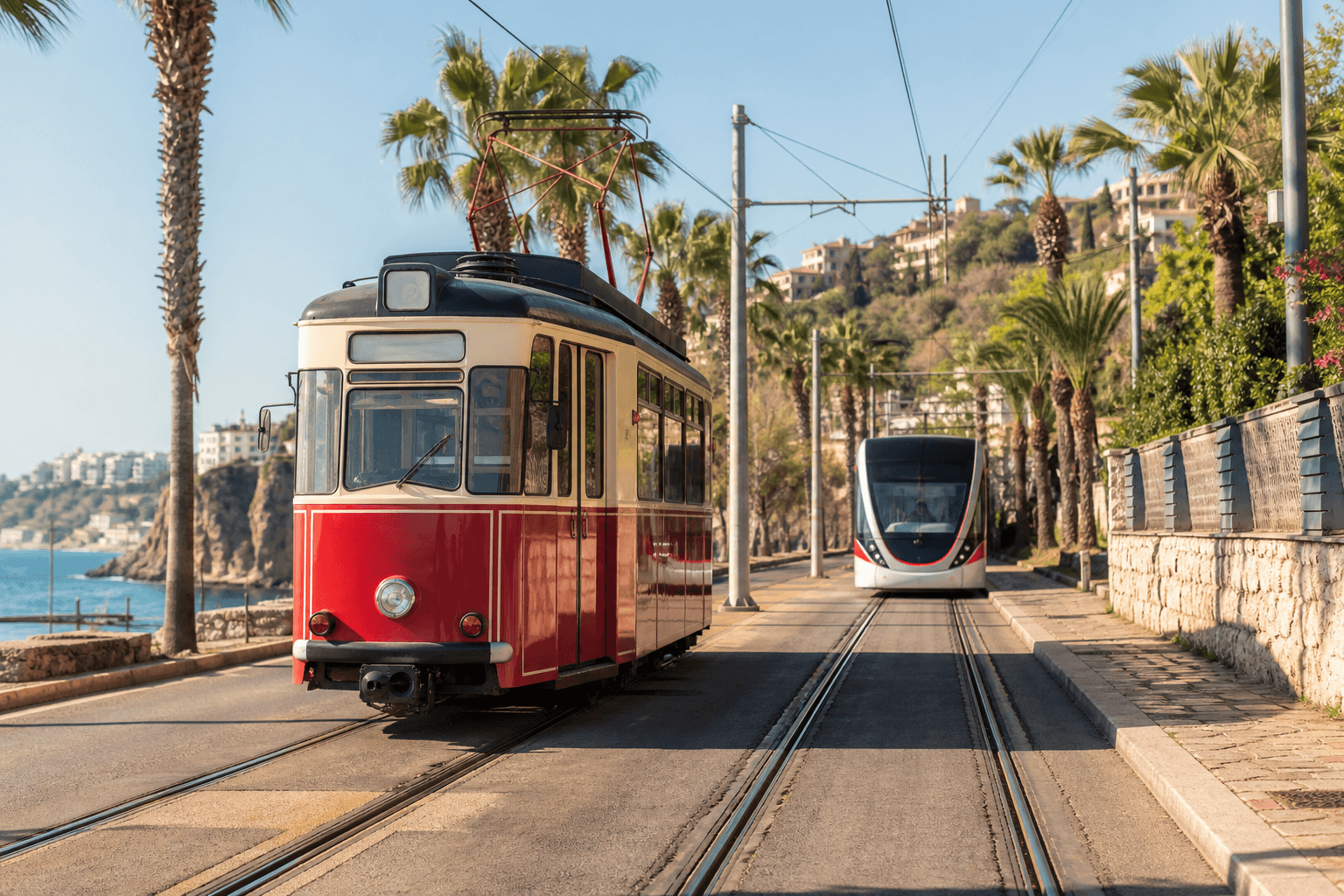
Antalya slowing down along the coast
Taking the tram in Antalya, especially toward late afternoon, is one of the easiest ways to feel the city’s rhythm from the inside rather than from above. But there are two different lines, and when you mix them up, the relationship you build with the city gets mixed up too. On one side there’s the nostalgic line, inching along by Kalekapısı and toward the Museum side; on the other, there’s the more orderly, more everyday AntRay, stretching from Varsak toward the airport and bus station. In the same city, they work like two separate tempos.
At this time of year, Antalya’s weather is the kind that makes you sweat quickly during the day. Especially as you walk inland from the sea, the heat is felt not just in the thermometer but in the pavement itself. In July and August, midday hours are demanding even for the tram; waiting a few minutes in the open air makes the search for cool shade unavoidable. That’s why the tram is not only transport for both tourists and locals, but also a bit of an escape from the sun. Yet that escape itself gets its share of the crowds. Especially at stops close to the coastal axis, summer midday and late afternoon start to look alike: people standing, people looking for shade, people carrying beach bags or work bags in their hands.
The nostalgic line takes on a different character here. The old-looking vehicle moving along the rails means a bit of a photo op, a bit of curiosity, and a bit of short-distance pleasure in Antalya’s center. But the real appeal of this line is not speed; it’s the chance to watch the surroundings. The movement formed by people getting on and off near Kaleiçi makes the coexistence of the old urban fabric and modern transport visible. Even on the hottest days of summer, this route works like a brief pause in the shade. But expectations need to be set correctly: the nostalgic line may give the feeling of a city tour, but it does not promise a cool, quiet, empty experience. Especially on weekend afternoons, even short trips become busier.
AntRay, meanwhile, serves a completely different function. It is like the city’s current backbone; the carrier of the daily flow connecting the center, the bus station, the university direction, and surrounding districts. Here, order and access come before nostalgia. The broader stop layout, more defined transfer points, and the profile of people commuting to work, heading to school, or trying to reach the airport determine the line’s character. While the morning hours move more neatly, the crowd inside the vehicles noticeably increases toward the end of the workday. When you add summer heat to human density, doorways and standing areas fill up even faster.
Nostalgic line or AntRay?
The short answer is this: if you want to form an emotional connection with the city, choose the nostalgic line; if you want to get things done quickly and practically, choose AntRay. The longer answer is a bit more nuanced. The nostalgic line gives you more of the experience of “being there” in Antalya’s center. Nearby cafés, movement opening into side streets, people wandering around the historic center — all of it turns the tram itself into a city scene. But that scene can sometimes become more tiring than comfortable, especially in the noon heat of summer. The sun quickly heats up even the shade at the stops; that’s why, unless you combine it with short walks, the pleasure of the nostalgic line is usually best enjoyed in the early morning or near sunset.
With AntRay, the picture is more practical. It connects longer distances and leans more on the local daily tempo. For someone who wants to see the rhythm of everyday life in Antalya, it is more instructive. Most passengers are moving for daily needs, not tourist reasons. That makes the line a good barometer for reading the city’s seasonal changes. When schools are closed in summer, some stops lighten up, but city movement doesn’t disappear completely; on the contrary, a different kind of density forms because of the links between the coast and the center. In winter, especially on cool but sunny days, the tram once again becomes a city habit.
When comparing the two lines, Antalya’s geography should not be forgotten. Even though it is a seaside city, the center does not cool down easily in summer. When humidity is added, the feeling of heat becomes heavier. That is why the tram becomes not just a means of transport, but a matter of planning. Boarding early in the morning narrows the impact of midday heat. Late afternoon, on the other hand, allows the city to breathe a little; a light breeze makes walking in the coastal areas more bearable. Right there, the nostalgic line looks more romantic, while AntRay looks more functional.
What do you see at the stops this season?
In the middle of summer, the most common thing at central stops is people trying to move quickly and reach shade. Some wait with ice cream in hand, some with a water bottle, some with shopping bags. On the business side too, the same seasonal tension is felt: at midday some shops slow down, shaded façades become more valuable. Especially on streets further inland, the struggle against the sun is obvious. In contrast, movement picks up again in the late afternoon; cafés begin to fill, more people go out for a walk, and tram stops become part of urban social life.
On the sea side, the picture changes according to the season. In summer, the water temperature makes swimming easy; for those entering the sea early in the morning, the surface often does not feel oppressively hot, but toward noon, getting out of the water can feel less like cooling off and more like stepping back into the heat. As autumn approaches, especially around November, the sea can still be appealing — but not for everyone. At that time, walking along the shore, feeling the light breeze, and wandering without missing the sun is a more realistic pleasure than swimming. During these transition days, the tram forms a good link between the coast and the center: it is possible to return from the calm of the seaside to the city center in a short time.
In winter, Antalya’s tram shows another face. When the weather softens, riding inside the vehicle becomes more bearable, the crowds fluctuate but are not as dominant as in summer. On the other hand, short rains and sudden winds can make waiting at open-air stops difficult. The advantage of the city in this season is that there are still plenty of days when you can look at the sea without getting chilled. Even so, for someone arriving with tourist expectations, January can be misleading; just because there is sun during the day does not mean the weather is always comfortable, and the evening chill settles in quickly.
Is it time to go now?
The clear answer: yes, but at the right time. The best period to experience the Antalya tram is often the transition months, when extreme heat has eased but the city has not emptied out completely. Spring and autumn offer a more balanced feeling for both the nostalgic line and AntRay. If you go in the middle of summer, you will understand the tram’s function very well, but the weather will overshadow the comfort. If you come in winter, the city looks calmer and more local; but sea and outdoor pleasures remain limited.
So is it sensible to go now to see the Antalya tram? If what you want is to feel the city’s hot, lively, and somewhat tiring summer rhythm, yes. But it has to be done not in the middle of the day, but early in the morning or near sunset. The nostalgic line tells you a story of a city slowing down in the center; AntRay shows you Antalya’s daily workings. Read together, they make it clear that in this city, transport changes character just as much as the season does.
For up-to-date business info and reviews about the places mentioned in this post, browse Antalya businesses on FindAntalya.
Featured with FindAntalya
Build your whole Antalya trip in one place
Flights, transfers, tours, hotels, insurance — find the best deal with FindAntalya-approved partners.

Airport transfer
Meet & greet, fixed price to your hotel
See prices
Car rental
Local suppliers, airport pickup
See prices
Tours & activities
Boat, safari, diving, day trips
See prices
Museum & attraction tickets
Aspendos, aquarium, theme parks — mobile ticket
See prices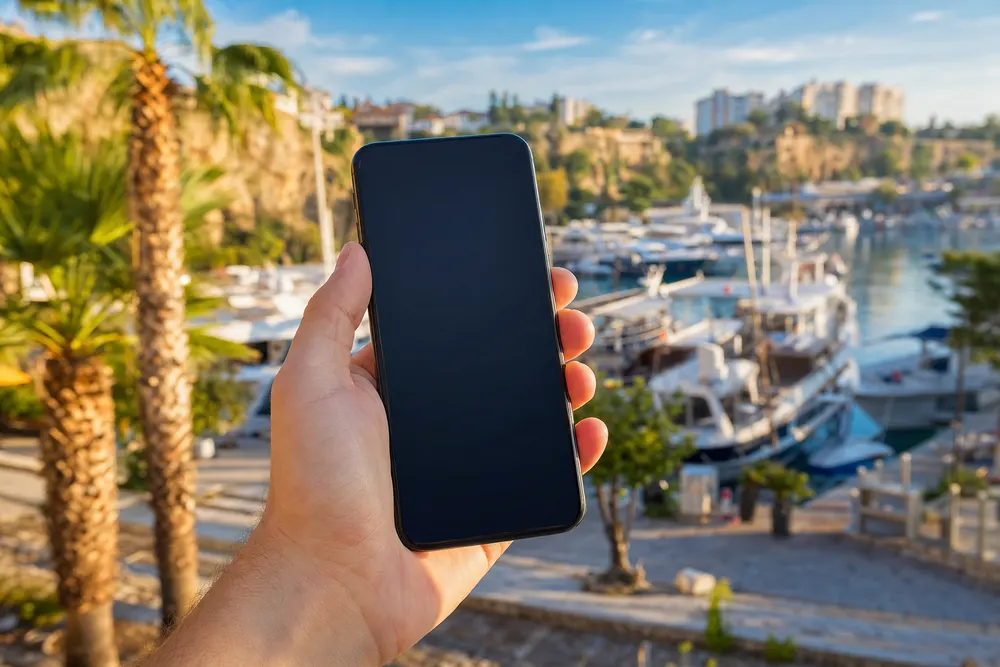
Tourist eSIM / data
Get online the moment you land
See prices
Travel insurance
Policy in minutes, peace of mind
See prices
Hotels & stays
Compare by area, find the best deal
See pricesPartner links; booking and payment are completed at the provider. Prices come from the provider.