
Staying on the Right Side at Düden Waterfall: Upper or Lower?
FindAntalya Guide TeamJuly 2, 20267 min read
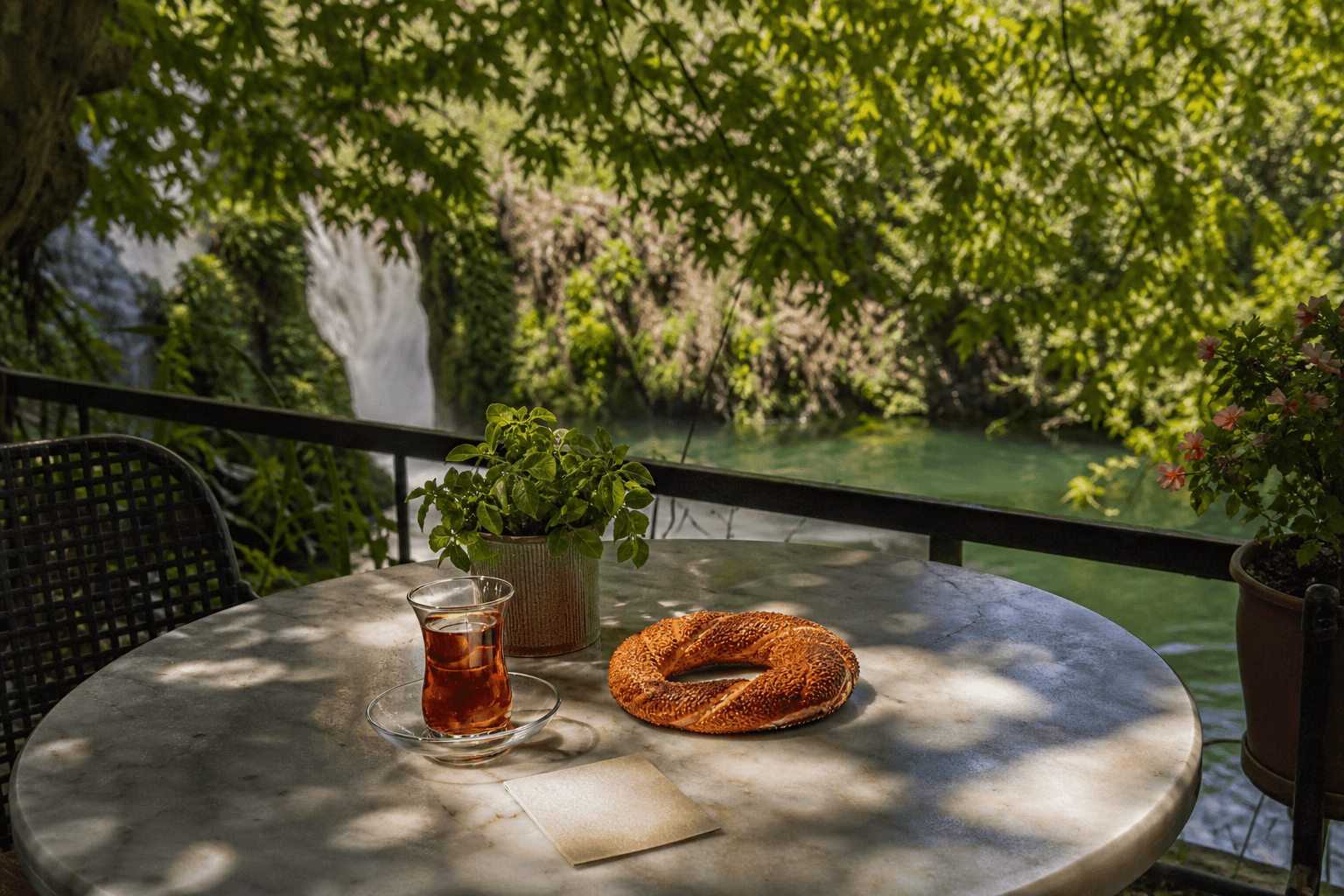
First, the short answer: Which makes more sense?
If you’re seeing Düden for the first time, for most people the upper side is the easier place to start. Why? Because it’s usually easier to reach from inside the city, you can get things done with a short walk around the area, and you can spend a half day without straining your budget too much. The lower side, on the other hand, is down by the sea, with a more open view and stronger photo potential. But getting there requires a bit more care in planning transport and time.
In short, if you have little money in hand and want to stay in the lane of “I went somewhere, came back, and saw something lovely,” the upper side is more practical. If you want “waterfall + sea air + a walk along the coast,” the lower side is more rewarding. It’s also possible to see both on the same day, but if you do that, taking unnecessary taxis will bloat the budget. The most economical way is to use public transport and walking together.

Upper side: It does a clean job on a small budget
The upper side’s advantage is that it’s more easily accessible from the center. With dolmuş (shared minibus) and municipal bus lines departing from central Antalya, it’s often possible to get close with no transfer or just one transfer. Since the lines can change from time to time, it’s a good idea to check the route before you go. Public transport makes the most sense especially for those coming from Konyaaltı, Muratpaşa, and around the bus terminal.
The basic plan here is this: leave early in the morning, visit before the crowds build up, then return from the same area. You don’t need to spend extra at the entrance; a walk, some viewing, and a short break make for a very satisfying outing. Just bringing water with you is enough. Instead of sitting in a café, creating a short picnic-like mood is the simplest way to protect your budget.
Another plus of the upper side is the presence of options around it that don’t inflate spending. In the side streets there are small markets, bakeries, and kiosk-type places; you can handle breakfast or snacks at a more reasonable price than in the city center. Instead of sitting down to a touristy meal, a low-cost combination like simit (sesame bread ring), poğaça (savory pastry), and ayran is much more sensible.
Lower side: The view is strong, transport should be smart
Because the lower side is by the sea, it gives more of a “complete” sightseeing feeling. Seeing the waterfall flow into the sea is impressive, especially for first-time visitors. But here the budget calculation is determined by transport. Even though direct access from the center is possible, the most modest solution is often a bus-dolmuş combination. If you’re willing to walk a short distance, approaching via the coastal line also works.
When heading to the lower side, keep this in mind: you won’t just see the waterfall on its own, you’ll also get a coastal walk around the area. So it makes sense to build the plan around walking without making it bigger than it needs to be. Bringing snacks and sitting by the shore lets you stretch the day without ending up with an expensive café bill. If you want to spend time by the sea, even just “go, look, and come back” can be more than enough in itself.
Part of a budget-friendly approach is choosing your return time well. In the late afternoon, when traffic increases, dolmuş and buses can become more tiring. So especially on weekends, not staying too late is smarter both in time and money.
How do you set up a cheap route? Dolmuş, walking, coast
The best strategy for experiencing Düden on little money is to move in pieces. Public transport instead of taxis, a quick snack instead of a long breakfast, a market solution instead of an expensive menu. It’s that simple.
If you’re leaving from the center, first aim for the municipal bus or dolmuş departing from the nearest main stop. If there isn’t a direct route from your neighborhood, making a short transfer is usually more economical. Antalya has public transport options along the coast and city center line; since routes can change from time to time, checking before you leave is a must. It’s a small hassle, but it brings the total cost down significantly.
Another practical method is to visit the upper side in the morning and then move on to the lower side. That way, it becomes one linked outing instead of two separate ones. Use dolmuş rather than calling a ride for the long stretch in between. Walk where walking makes sense, and cover short distances without spending money. With this setup, you end up with a day that’s quite affordable compared with staying only in the city center.
Getting around the city on Sundays can also work in your favor. In some areas, Sunday mornings are calmer, public transport flows more smoothly, and moving around is less exhausting. Of course, some places can also be crowded on Sundays; since families go out, early morning has the advantage. If you want to avoid crowds, early hours are best; if you want sea air, before noon is the right time.
Free or very low-cost extras: public beach and a coastal break
You don’t have to limit your Düden visit to just the waterfall. Especially if you’re seeing the lower side, a coastal walk and the public beach nearby make sensible additions. The aim here is to get sea air without spending money. Sun loungers, umbrellas, café tables — none of that is necessary. If you bring your own towel and water, the cost drops.
Rather than staying all day on the public beach side, it’s better to take a short break. After seeing the waterfall, sit by the shore, have a snack, then head back. This way the outing doesn’t turn into “extra spending.” Since Antalya’s coastal line is wide, you can enjoy the sea without sitting down at a table; use that.
And one more thing: you don’t need to set aside a separate budget for photos. Shooting in the early morning light or the soft light of late afternoon gives good results without expensive gear. A phone camera is enough. Catching the right hour is smarter than chasing flashy moments.
Sample day plan for the most modest budget
Leave early. From the center or your neighborhood, go to the upper side by bus or dolmuş. See the waterfall with a short walk, spend some time around it. Then move to the coastal line and take in the lower side. If you still have energy, make a short stop near the public beach. For lunch, a simple sandwich or a bakery item bought from a market is enough. Then head back to the center again by public transport in the late afternoon.
The nice thing about this flow is that in a single day you see both the upper and lower sides, but you don’t make a big expense. As long as you don’t take a taxi, the budget stays under control. When you limit café, restaurant, and tourist shuttle expenses, the day becomes quite economical.
The gist: the upper side is the easier starting point, the lower side the stronger finish. If you’re traveling on little money, start from the top and end by the sea. For Sunday, the best move is to leave early and not give up on public transport. If you’re wondering “With this budget, where should I look?”, on FindAntalya start with places reachable by public transport from the center, with a coastal walk and a public beach connection; that’s the cleanest way to fill the day with very modest spending.
For up-to-date business information and reviews about the places mentioned in this post, browse Antalya businesses on FindAntalya.
Featured with FindAntalya
Build your whole Antalya trip in one place
Flights, transfers, tours, hotels, insurance — find the best deal with FindAntalya-approved partners.

Airport transfer
Meet & greet, fixed price to your hotel
See prices
Car rental
Local suppliers, airport pickup
See prices
Tours & activities
Boat, safari, diving, day trips
See prices
Museum & attraction tickets
Aspendos, aquarium, theme parks — mobile ticket
See prices
Tourist eSIM / data
Get online the moment you land
See prices
Travel insurance
Policy in minutes, peace of mind
See prices
Hotels & stays
Compare by area, find the best deal
See pricesPartner links; booking and payment are completed at the provider. Prices come from the provider.