
BlogFamily Trips· Side
In Side as a Family: Shade in the Ancient City, Rhythm on the Beach
FindAntalya Guide TeamJuly 31, 20266 min read

Side as a family on vacation: your goal is clear. See the ancient city with short, planned blocks; lean into the beach/sea during the midday heat; and place the toilet and shade into your route plan per stop. The stroller works in most places, but some streets may be rough enough that you’ll need to “push it through.”
Will a stroller work? “Real” ground in Side Seeing Side splits into two parts: the streets inside the ancient city, and the walking routes that lead down to the shore and connect to it.
- Stroller (and light jogger): You’ll move more comfortably in the sections close to the coast and main corridors. But in the transitions inside the ancient area, pavement stones, some narrow spots, and slopes come into play. So instead of expecting to “go everywhere without bumping your nose,” plan to slow down and push in certain areas.
- Walking child: For ages 3–6, if you plan the route well, it can be great fun. For 6+, the stone texture and historical remains can start to feel “like a show” and boredom can hit quickly. Here the goal is a rhythm of “see-stop-photo—then a game.”
- B plan hint: If you run into difficulty in the ancient city, don’t try to “do the full loop.” Seeing a few main points and then turning back is often the most efficient choice for most families. For younger children, the longer it goes, the less calm they feel.
Practical tip: Bring a spare hat/even a thin scarf for short distances too, a rain cover/bundle that fits your setup (poncho/tarp for sudden chill/storage), and carry support on your shoulder (ergonomic strap). That way, you can decide on the spot in the rougher sections.

Shade and heat: “ancient city in the morning, beach in the afternoon” In Side, the golden rule for sightseeing with family is choosing the time. Even though there is shade inside the ancient city, as the day moves on, the distribution of shade changes.
- Best window: Early morning hours (before the crowds really build) are more comfortable for the areas you’ll walk in the ancient district.
- Midday plan: Between 11:00 and 15:00, children’s energy drops faster. Spending these hours in the beach with cooling by the sea, relaxing in the shade, and inserting short play breaks is usually easier.
- Managing shade: “Is there shade?” matters, but so does “how do we get back to it?” Build your route so that from every break point you can return to the shore/the main corridor.
A mini strategy so the kids don’t get bored: give a “spotting mission” every 20–30 minutes in the ancient city. For example: “Is there a mark on that stone?”, “Who can find the best shade—game time?” For older kids, turning history into a game gets quicker results than “making it a lecture.”
Toilets-sink: one move plan, two backup routes In a family vacation, the toilet is the hidden driver of the plan. Along the seaside line it’s easier to access, while inside the ancient city, over time, distances can stretch.
- In the ancient city: At the start of your visit, think about “where, and how much walking.” Even if each stretch is short, when the toilet need hits, you may reach points that will require coming back.
- On the beach: The coastline is generally more manageable. Still, if you go with a child, calculate the “return” time while you’re in the sun.
Bring: wet wipes + a small cloth/bag, spare clothes (especially for a baby/small child), and a basic hand sanitizer. Even more important: set the tempo according to your child’s age.
- Baby (0–2): Instead of “walking all day,” do short blocks. Adjust feeding/sleep in each block. Skip very long ancient-city tours and choose short lines where the stroller can move comfortably.
- Small child (3–5): Aim to leave the ancient area before 60–90 minutes. Then head back to the beach to recharge with the sea/play.
- Older child (6–10): Don’t drag it out with historical “storytelling.” See 2–3 main points, then continue with a “assigned game.” For example, around the ruins instead of “hide-and-seek,” try counting games/color hunts.
The moment the child gets bored—and the B plan Boredom usually doesn’t arrive in a single moment; first you get a “restlessness signal.” In Side, noticing that signal and stretching the route is what saves the family vacation.
The first signals (less eye contact, short tantrum bursts, slowing down):
1) Inside the ancient city: Don’t extend the trip back. Instead of “the next big stop,” approach the nearest turn-back point. Telling your child “we’re coming back” often finishes half the battle.
2) On the beach: If boredom is tied to the loop of going in/out of the water, add a short “beach-side mission” without taking them away from the sea. For example: finding stones, searching shells, making sand molds. Control how long their skin stays in the sun.
3) When the air feels heavy: Shade + short drinks/snacks + toilet break. For most families, 25–40 minutes of regrouping can save the rest of the day.
One-sentence B plan: “The ancient tour can be cut short; the vacation can still flow.” This approach is more sustainable with children.
Finally, when you set the family rhythm in Side, remember this: the remains are impressive, but what children need isn’t “continuity”—it’s alternating entertainment and rest. Short blocks in the ancient city and longer blocks on the beach are to your advantage.
Frequently Asked Questions? ## Is it difficult to tour the ancient city in Side with a stroller? “Very difficult” isn’t quite accurate, but don’t expect “comfortable everywhere.” You’ll progress more easily on the main routes; in some transitions inside the ancient city, you may have to slow down due to stone ground and slopes. Supporting it with a baby carrier/strap instead of a stroller provides peace of mind.
Is the best order in Side ancient city first or the beach? In general, the most comfortable sequence is ancient city in the morning, then beach/rest in the afternoon. When temperatures rise, children’s energy can drop; the sea and shade are easier to manage during that period. If you plan according to the hours, boredom is less.
How do you handle toilet breaks in the ancient city? Instead of extending the ancient tour, think from the start about the need for a “nearby return.” Since you might need to go back when the toilet need hits, split the route. Having wet wipes, a bag, and spare clothes with you reduces stress especially for small children.
S/C: The key to touring Side as a family is short ancient-city blocks + an afternoon beach rhythm + planning toilets/shade into the route; the stroller works in most places, but be prepared to push/carry through rough sections.
For up-to-date business information and reviews about the places mentioned in this post, check out FindAntalya’s Side guide.
Featured with FindAntalya
Build your whole Antalya trip in one place
Flights, transfers, tours, hotels, insurance — find the best deal with FindAntalya-approved partners.

Airport transfer
Meet & greet, fixed price to your hotel
See prices
Car rental
Local suppliers, airport pickup
See prices
Tours & activities
Boat, safari, diving, day trips
See prices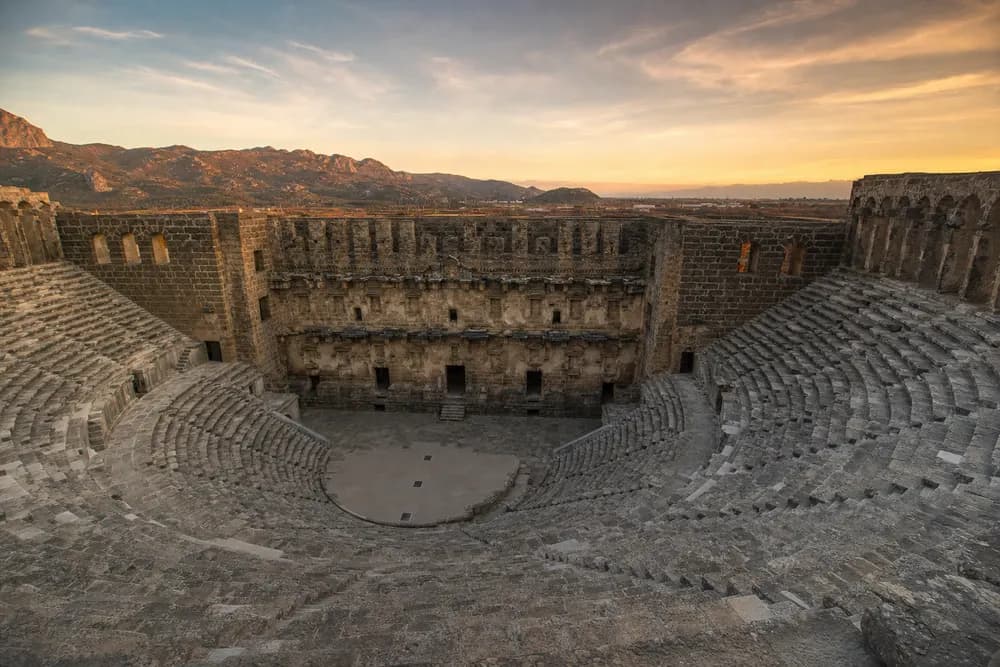
Museum & attraction tickets
Aspendos, aquarium, theme parks — mobile ticket
See prices
Tourist eSIM / data
Get online the moment you land
See prices
Travel insurance
Policy in minutes, peace of mind
See prices
Hotels & stays
Compare by area, find the best deal
See pricesPartner links; booking and payment are completed at the provider. Prices come from the provider.